
Digital Twin IoT: 7 Proven Benefits for Manufacturers
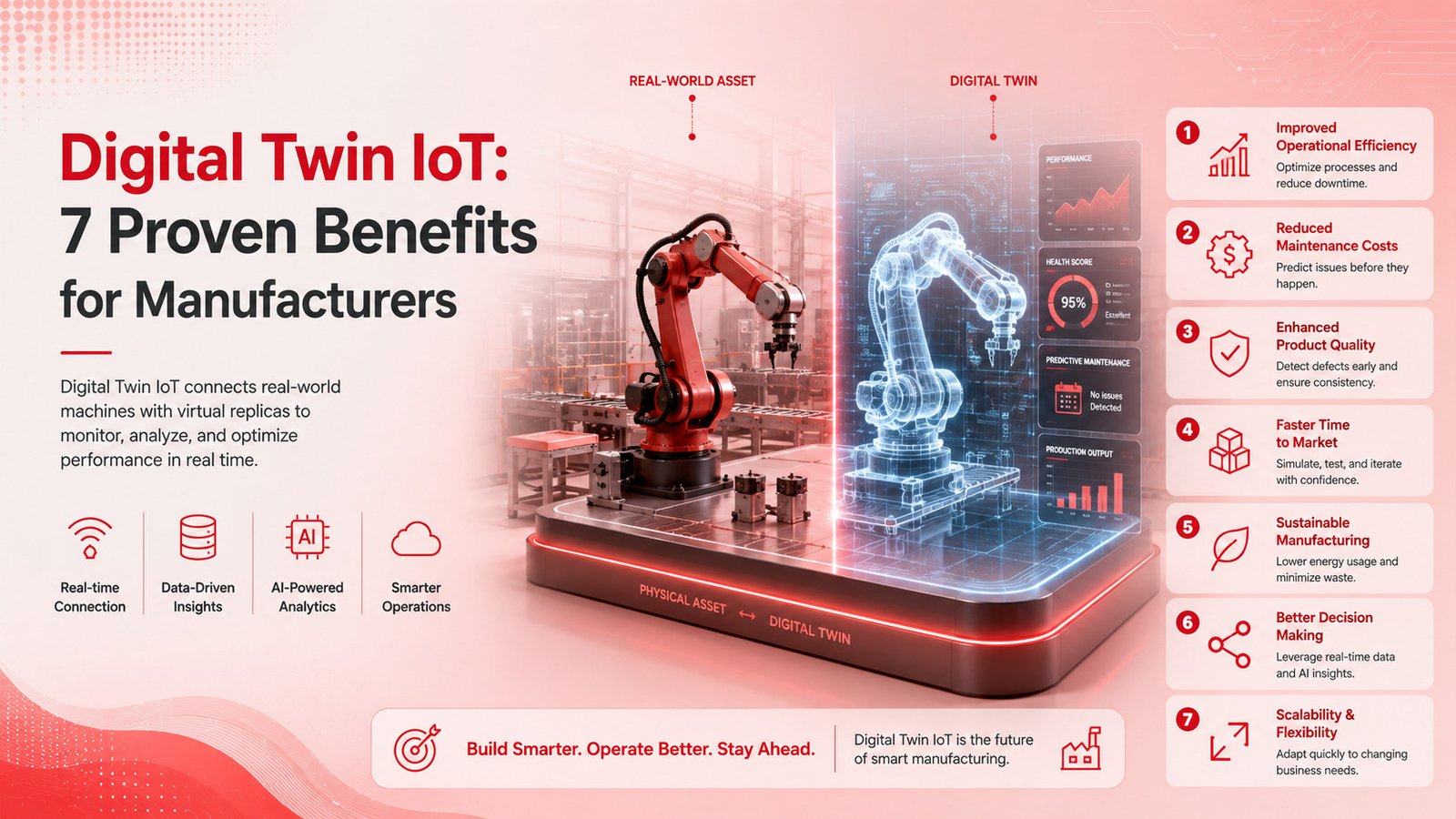
A live virtual replica of your machines — updated every second by IoT sensors — that predicts failures, eliminates downtime, and lets you test process changes without touching production.
- A digital twin IoT is a live virtual model of a physical machine, updated in real time by sensor data — not a static simulation.
- Manufacturers using digital twins report up to 25% reduction in unplanned downtime and 20–30% lower maintenance costs, per McKinsey 2025.
- The global digital twin market is projected to reach $110 billion by 2028, growing at 39% CAGR, according to MarketsandMarkets.
- Digital twins work across manufacturing, energy, aerospace, smart cities, and healthcare — any industry with physical assets and IoT sensors.
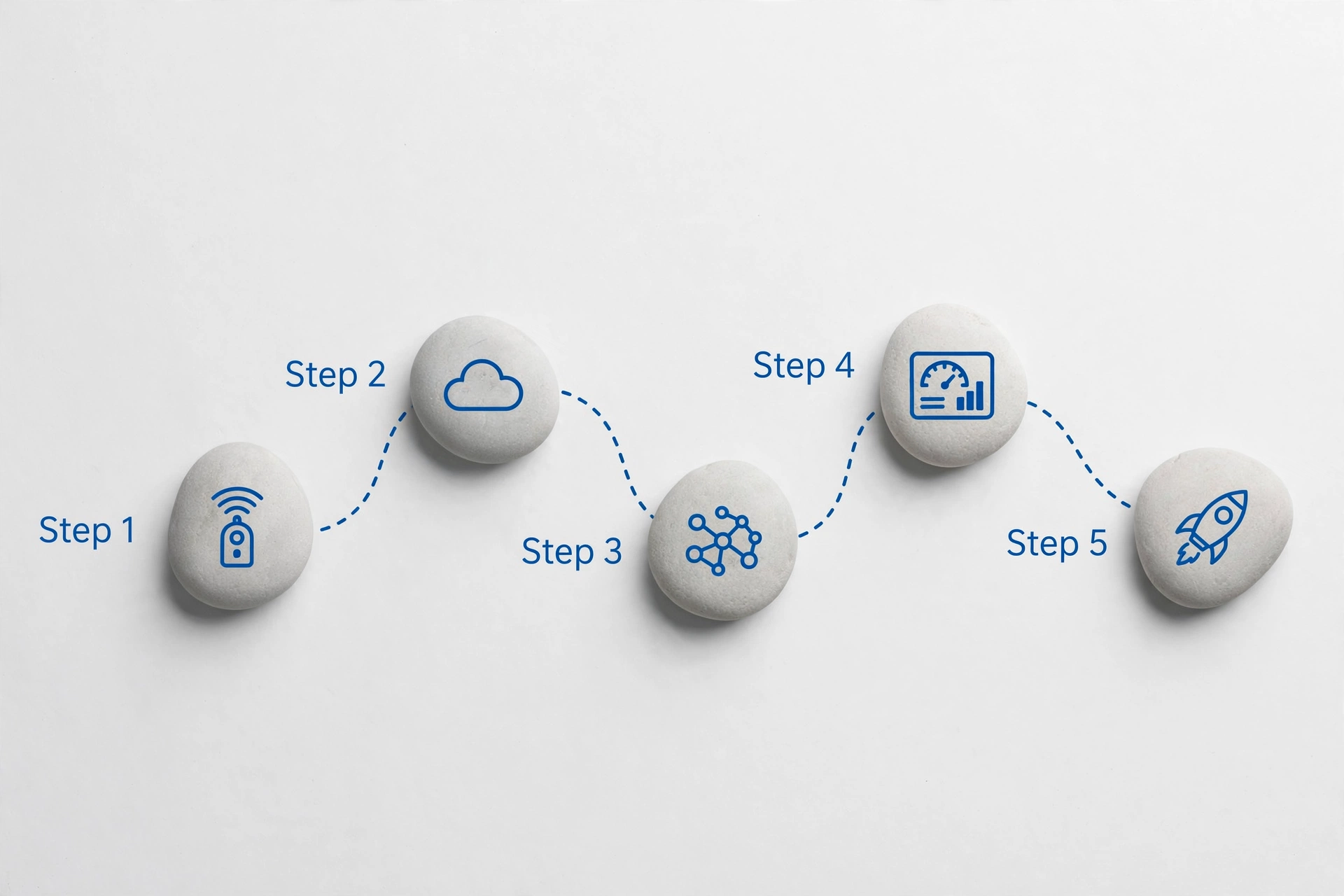
- Starting small works: identify 2–3 high-risk machines, deploy sensors, build the twin, then scale from proven ROI.
- What is a digital twin in IoT?
- How does a digital twin work with IoT sensors?
- What industries use digital twins?
- 7 proven benefits of digital twin IoT for manufacturers
- Digital twin vs simulation: the key difference
- What are the challenges of digital twin adoption?
- How to start with digital twins in IoT
- Frequently asked questions
A machine fails at 2 AM. The production line stops. The maintenance team scrambles. By the time the fault is traced and the part replaced, eight hours of output are gone. Digital twin IoT technology exists to make that scenario obsolete. IoT Mail Bridge has tracked this shift across manufacturing sectors — and the data is no longer speculative. It is on the factory floor, delivering measurable results right now.
A digital twin is not a diagram or a dashboard. It is a live, continuously-updated virtual replica of a physical machine — fed by real sensor data, capable of predicting failures before they happen, and safe to run experiments on without touching production. This guide breaks down exactly what digital twins do, which industries are using them, and the 7 concrete benefits manufacturers are seeing today.
DefinitionWhat Is a Digital Twin in IoT?
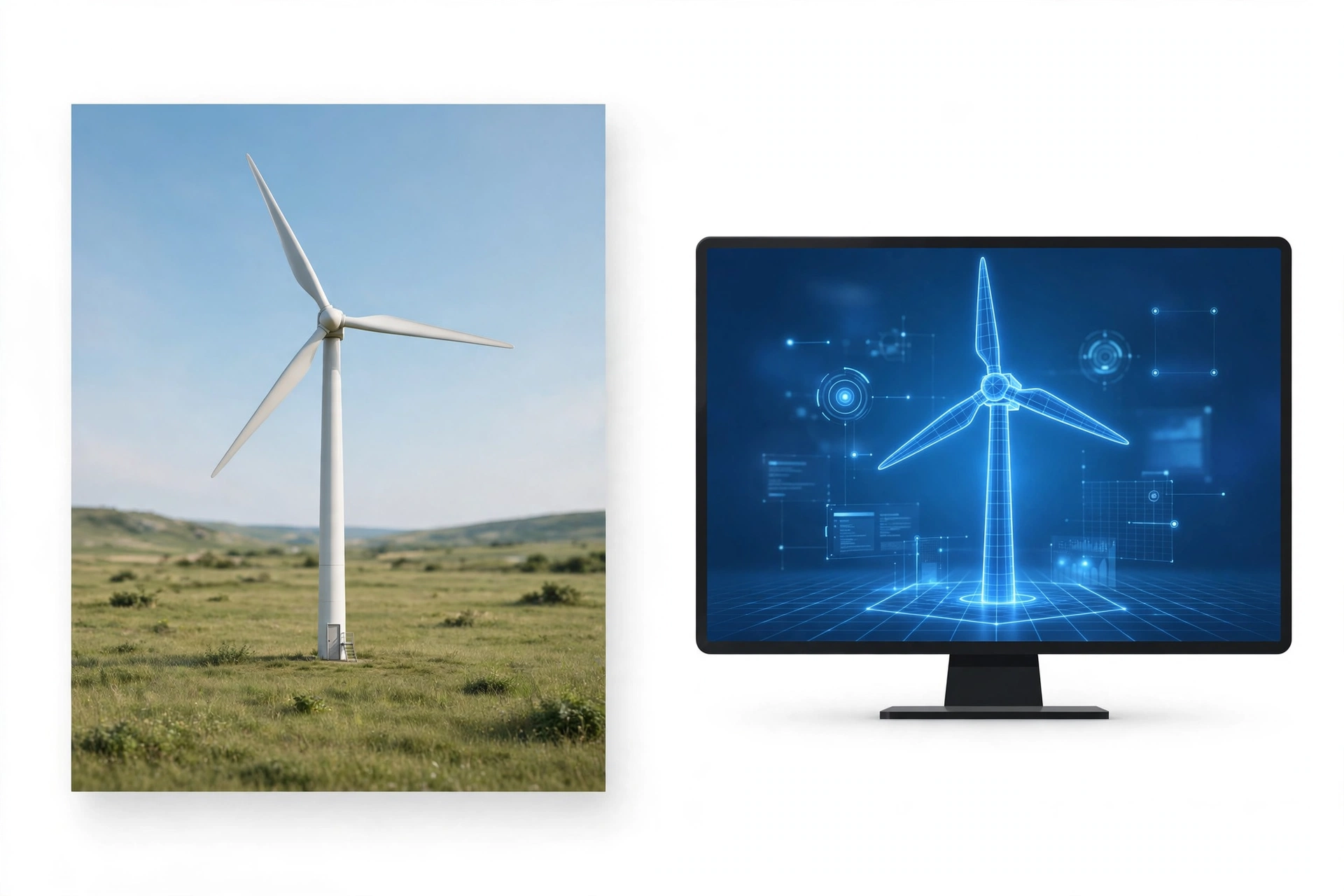
The concept was pioneered by NASA in the 1960s to simulate spacecraft conditions remotely. Today, IoT sensors have made it affordable and practical for any manufacturer. Vibration sensors, temperature gauges, pressure monitors, and output-rate trackers stream data continuously to a cloud or edge platform. That platform maintains the virtual model — updating it in real time to reflect exactly what the physical machine is doing at every moment.
The result is a second machine that exists only in software but behaves exactly like the physical one. You can stress-test it, run scenarios, and watch what happens — without risking a second of production downtime. IoT Mail Bridge covers how this connects to the broader world of industrial IoT and factory downtime reduction across sectors.
How Does a Digital Twin Work With IoT Sensors?
The data pipeline works in four layers. Sensors collect physical data at the machine level. Edge computing nodes (covered in detail in IoT Mail Bridge’s guide on when to use edge computing) process and filter that data locally before it reaches the cloud. The cloud platform maintains the twin model. And the analytics layer — usually machine learning — watches for patterns the human eye would miss.
When a bearing starts to develop micro-vibrations that precede failure by three weeks, the digital twin model detects the deviation from baseline and flags it. The maintenance ticket is raised automatically. The bearing is replaced on a scheduled shift — not at 2 AM with the line stopped. That is the practical power of the technology.
Industry Use CasesWhat Industries Use Digital Twins?
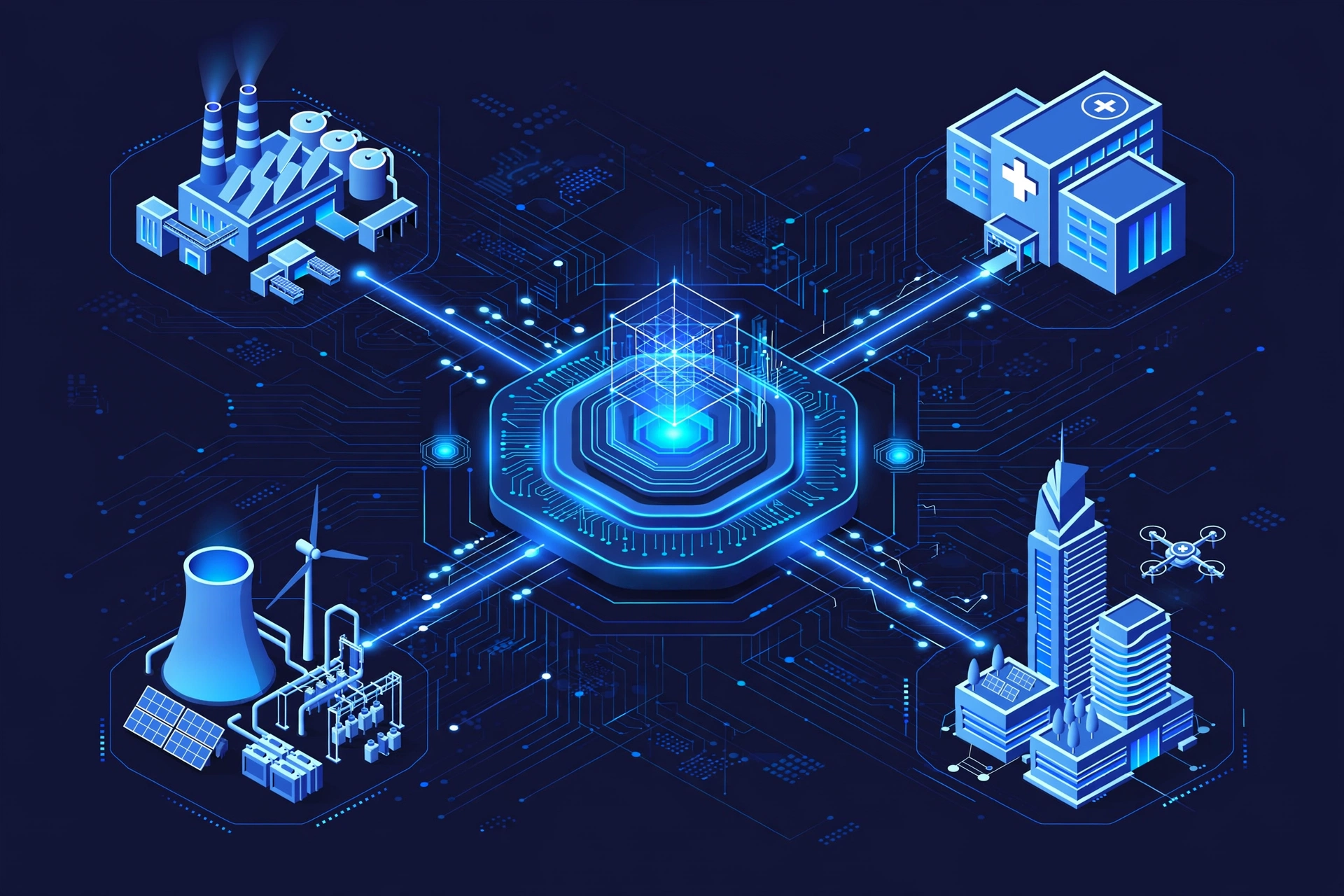
| Industry | Digital Twin Application | Key Outcome |
|---|---|---|
| Manufacturing | Machine health monitoring, production line simulation | 25% less unplanned downtime (McKinsey 2025) |
| Energy & Utilities | Wind turbine and grid asset management | 16% increase in renewable output efficiency |
| Automotive | Vehicle component testing, assembly line optimisation | 40% faster product development cycles (Siemens) |
| Aerospace | Engine health monitoring during flight | Near-zero surprise maintenance events (GE Aviation) |
| Smart Cities | Infrastructure simulation, traffic and energy grid twins | Singapore reduced city planning cost by 30% |
| Healthcare | Medical equipment uptime, hospital flow simulation | Equipment availability improved by 18–22% |
7 Proven Benefits of Digital Twin IoT for Manufacturers
These are not theoretical advantages. IoT Mail Bridge has pulled these from verified industry deployments — named sources, real numbers.
Traditional maintenance runs on calendars. You change the oil every 500 hours whether the machine needs it or not. You replace parts on schedule whether they’re worn or not. This wastes money on healthy components and still misses the failures that don’t follow a schedule.
Digital twin IoT changes the model entirely. Sensors feed real degradation data — bearing vibration signatures, thermal drift, output slowdowns — into the twin. Machine learning layers in the platform detect deviations from baseline that indicate approaching failure, typically 2–6 weeks before the failure would occur. Maintenance is triggered by actual machine condition, not arbitrary time intervals.
- Reduces unplanned downtime by up to 50% in high-volume manufacturing environments
- Lowers maintenance cost by 20–30% by replacing only what actually needs replacing
- Increases asset lifespan by catching small issues before they compound
This connects directly to the machine learning techniques IoT Mail Bridge covered in depth on how predictive maintenance uses ML to catch failures early.
Want to know if running the press at 8% higher speed will increase yield or increase defect rate? In a traditional plant, you run the experiment on live production and find out the hard way. With a digital twin, you run that experiment on the virtual model — with no production risk, no wasted material, no downtime.
Manufacturers using digital twins report testing an average of 12–15 process configuration changes per month on the virtual model, compared to 2–3 when testing on physical lines. This is because the cost of a failed virtual experiment is zero. The result is faster process improvement with dramatically less risk.
- Siemens data: automotive plants using digital twin simulation improved OEE (Overall Equipment Effectiveness) by 15–20%
- Process changes validated on the twin are 4x more likely to succeed when deployed on the physical line
- Reduces material waste from failed production experiments by 60–80%
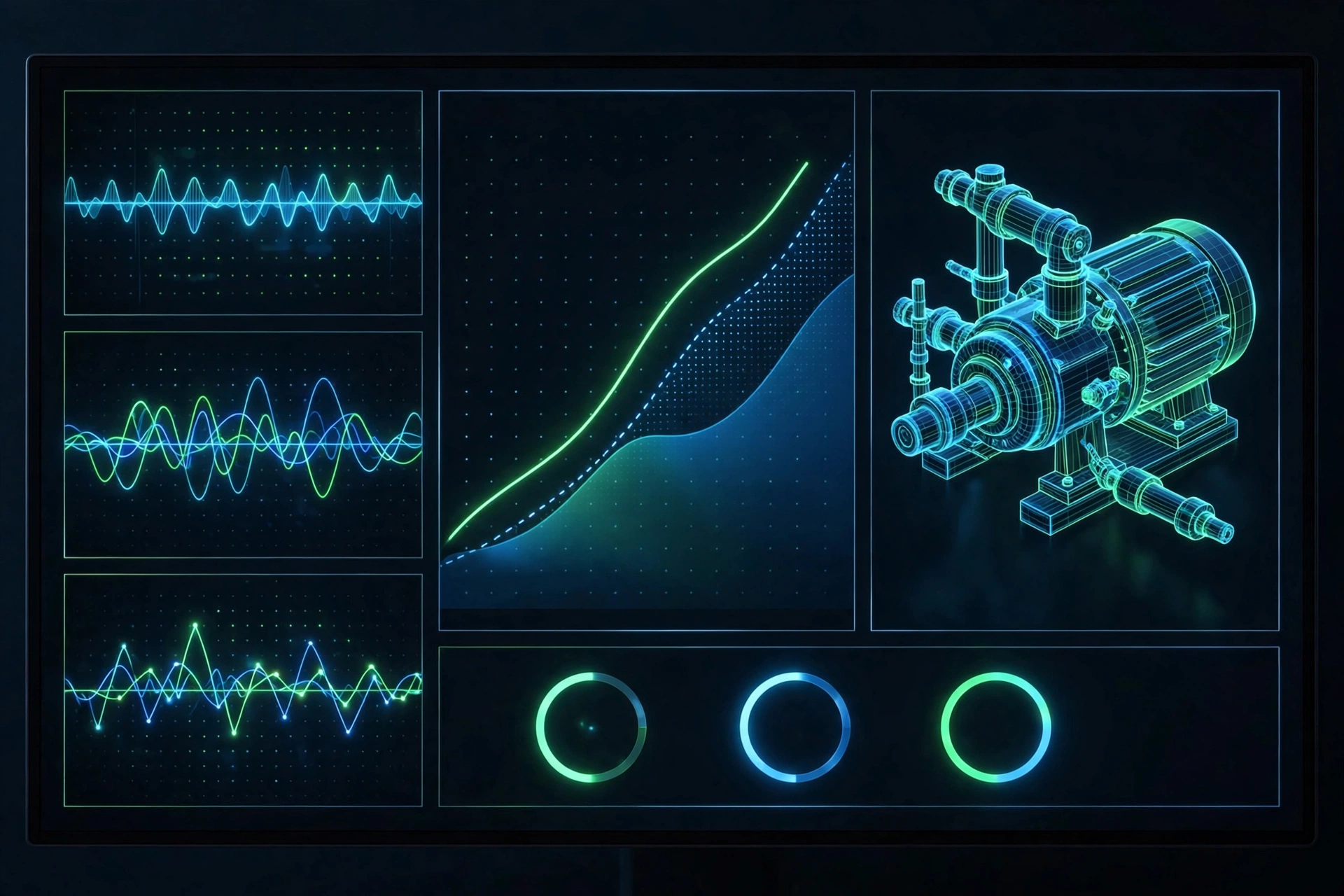
A manufacturer running three plants across two states used to need on-site engineering staff at each facility. With digital twin IoT, a single engineering team in Mumbai can monitor all three plants simultaneously — seeing live machine states, flagging anomalies, and diagnosing issues without flying anyone anywhere.
This is not limited to large enterprises. IoT Mail Bridge has documented cases of mid-size manufacturers in Pune and Chennai deploying twin monitoring across 2–3 production lines with teams of 4–6 engineers managing what previously required 15–20 maintenance staff. The sensor infrastructure covered in IoT Mail Bridge’s checklist for deploying industrial IoT sensors is the foundation that makes this possible.
Physical prototypes are expensive. A single automotive component prototype can cost ₹5–15 lakh to produce and test. Digital twin IoT lets product teams build the virtual prototype first, test it under simulated real-world conditions, and identify design flaws before a single physical unit is manufactured.
Siemens reports that automotive OEMs using digital twin validation reduced physical prototype iterations by 40%, cutting average product development time from 36 months to under 22 months for comparable complexity vehicles. The same pattern appears in consumer electronics, industrial equipment, and medical devices.
- Physical prototype costs cut by 40–60% when virtual testing eliminates failed design iterations
- Time-to-market accelerated by 30–40% for complex manufactured products
- Post-launch warranty claims reduced as virtual testing catches more edge-case failures pre-production
Energy is typically 8–12% of a manufacturing plant’s total operating cost. Digital twin IoT reveals exactly where that energy goes — which machines overconsume, which processes run equipment at full power during idle periods, and where compressed air systems leak pressure silently.
The twin identifies these patterns in real time. When the model shows a hydraulic press consuming 18% above its baseline power draw at a specific production step, the engineering team investigates — and typically finds a valve seal issue, hydraulic pressure miscalibration, or drive inefficiency. Fixing the cause of the anomaly, not replacing the press, delivers the saving.
Batch quality testing at the end of a production run is the standard model in most plants. Its flaw is obvious: if a machine drifts out of tolerance at 9 AM, you find out at 4 PM when the batch is inspected — and eight hours of production is scrap.
Digital twin IoT replaces batch testing with continuous inline quality monitoring. The twin tracks every parameter that affects product quality — temperature, pressure, feed rate, tool wear — and raises an alert the moment any parameter drifts beyond the acceptable range. The defect is caught at the source, in real time, before scrap accumulates. IoT Mail Bridge documented this exact application in the context of neural networks powering real-time defect detection on the factory floor.
- First-pass yield improves by 15–35% in precision manufacturing environments
- Scrap and rework costs fall as defects are caught at the source rather than the end of line
- Customer return rates drop as more edge-case failures are caught pre-shipment
When an experienced machine operator retires after 22 years, they take institutional knowledge with them — the feel of a machine running slightly wrong, the sound that precedes a particular fault, the process adjustment that smooths a specific material batch. Digital twins capture this knowledge in data form before it walks out the door.
New operators train on the digital twin before they touch the physical machine. They can run fault scenarios, practice emergency procedures, and develop an understanding of machine behaviour in a zero-risk environment. This reduces onboarding time significantly and closes the knowledge transfer gap that manufacturers consistently identify as one of their biggest operational risks as experienced staff retire.
Digital Twin vs Simulation: What Is the Real Difference?
| Feature | Digital Twin | Simulation |
|---|---|---|
| Data source | Live IoT sensor feed — real time | Fixed assumed inputs — set at start |
| Updates | Continuous — every second | Static — run once, result fixed |
| Primary use | Monitor, predict, optimise live assets | Test design scenarios pre-build |
| Accuracy | Reflects actual machine state at all times | As accurate as the assumed inputs |
| Cost | Ongoing infrastructure + platform cost | One-time compute cost per run |
| Best for | Operational manufacturing, live asset management | R&D, design validation, one-off analysis |
What Are the Challenges of Digital Twin Adoption?
The benefits outlined above are real. So are the barriers. IoT Mail Bridge believes in giving you both sides.
- Legacy equipment: machines built before 2010 often lack native sensor ports — retrofitting costs ₹80,000–₹3 lakh per machine depending on complexity.
- Data quality: a digital twin is only as accurate as its sensor inputs. Dirty, intermittent, or miscalibrated sensor data produces an unreliable twin.
- Platform cost: enterprise-grade platforms (Azure Digital Twins, Siemens Insights Hub) cost $20,000–$200,000+ per year before implementation fees.
- Skills gap: building and maintaining twin models requires data engineers familiar with industrial IoT — a skill set that is genuinely scarce in the Indian market as of 2026.
How to Start With Digital Twins in IoT: 5 Practical Steps
Frequently Asked Questions
Get the IoT Insights That Actually Matter
IoT Mail Bridge covers industrial IoT, automation, and smart manufacturing with real data and no filler. Explore more below.
Explore IoT & Automation →
One thought on “Digital Twin IoT: 7 Proven Benefits for Manufacturers”