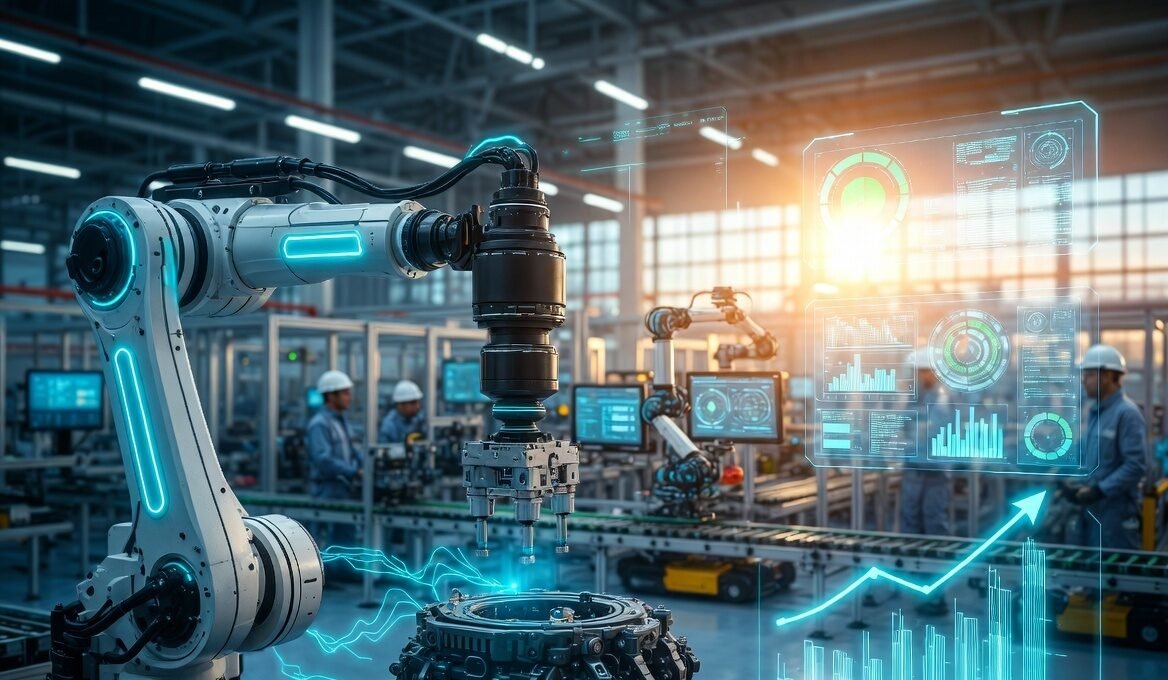
In today’s fast-paced manufacturing world, staying ahead means embracing change. Many Indian factories still rely on manual processes that slow them down and raise costs. This is where industrial automation solutions come in. They help companies produce more with less effort, reduce errors, and grow steadily in a competitive market.
Business owners across sectors like automotive, pharmaceuticals, food processing, and textiles often face challenges such as labour shortages, rising operational costs, and the need for consistent quality. Industrial automation solutions address these issues directly. By integrating smart systems like PLCs, SCADA, robotics, and IoT sensors, factories can achieve higher productivity and scalability. In India, where manufacturing is a key pillar of economic growth, these solutions are becoming essential for long-term success.
Why Industrial Automation Solutions Matter for Growth
Industrial automation solutions refer to the use of control systems, software, and advanced machinery to handle tasks with minimal human intervention. This includes everything from simple sensors to full smart factory setups. The result? Businesses see real growth through better efficiency and lower risks.
According to industry reports, the global industrial automation market is expanding rapidly, with strong adoption in Asia-Pacific regions including India. Companies that invest early often report 20-50% improvements in key areas like throughput and downtime reduction.
For a mid-sized manufacturer in Pune or Coimbatore, switching to automation can mean moving from manual data entry to real-time monitoring. This shift frees up workers for higher-value tasks and helps scale production without proportional increases in staff.
Key Benefits of Implementing Industrial Automation Solutions
Businesses that adopt industrial automation solutions enjoy several clear advantages that directly support growth:
- Increased Productivity and Efficiency: Automated lines run faster and more consistently. For example, one Rockwell Automation facility improved space utilization by 70% and saved significantly on labour through autonomous mobile robots.
- Cost Savings: Predictive maintenance reduces unplanned downtime. A BASF plant using Emerson tools avoided costly outages and saved thousands per incident. Energy-efficient systems, like those from Grundfos, have cut cooling costs by up to 70%.
- Improved Quality and Compliance: Automation minimises human error. Pharmaceutical companies in India have achieved near-perfect compliance rates with automated batch controls.
- Better Safety and Workforce Utilisation: Robots handle repetitive or hazardous jobs. This reduces accidents and helps address India’s skilled labour shortage.
- Scalability for Market Expansion: Flexible systems allow quick changeovers for different products, helping companies respond to customer demands and enter new markets.
One Indian automotive parts manufacturer using tailored automation saw a 35% output increase and 20% cost reduction, delivering ROI in just nine months.
Latest Trends Shaping Industrial Automation Solutions
The field is evolving quickly. In 2026, several trends stand out for Indian manufacturers:
AI and Predictive Analytics: Systems now predict failures before they happen. This moves maintenance from reactive to proactive.
Collaborative Robots (Cobots): These work safely alongside people. They are ideal for SMEs handling varied production runs.
Digital Twins and IIoT: Virtual replicas of production lines let teams test changes without stopping operations. Edge computing processes data locally for faster decisions.
Sustainability Focus: Automation helps monitor and reduce energy use, aligning with government green initiatives.
Cybersecurity in OT Networks: As systems connect more, protecting them becomes critical, especially with regulations tightening.
These trends make industrial automation solutions more accessible and powerful than ever, even for smaller setups.
Real-Life Examples from India and Around the World
Consider a dairy plant in Punjab that automated its Clean-In-Place (CIP) wash system. Manual operations gave way to consistent, compliant cycles using modern PLC and SCADA integration. This reduced waste and improved food safety standards.
Globally, Nestlé transformed a plant in Mexico with Schneider Electric’s platform. They avoided major incidents and saved around $2 million. Closer home, automotive giants in India use MES systems to boost OEE from 62% to 85% and slash downtime.
A food processing unit reduced energy consumption by 30% after implementing Industry 4.0 solutions. These stories show that industrial automation solutions deliver measurable growth across sectors.
How to Get Started with Industrial Automation Solutions
Taking the first step does not need to be overwhelming. Follow these practical tips:
- Assess Your Current Operations: Identify bottlenecks in production, quality checks, or inventory.
- Start Small: Pilot automation on one line, such as adding sensors for monitoring or a single cobot for packaging.
- Choose the Right Partner: Work with experienced providers familiar with Indian conditions, like those offering Siemens, Rockwell, or Schneider systems. Local support ensures smooth implementation.
- Train Your Team: Invest in upskilling. Many workers transition successfully to operating and maintaining automated systems.
- Focus on Integration: Ensure new solutions connect with existing ERP or MES for full visibility.
Budgeting wisely matters. Many projects pay back within 1-2 years through savings and increased output.
Addressing Common Concerns
Is it too expensive for SMEs? Not necessarily. Modular and scalable options exist. Government schemes like PLI for manufacturing can help offset costs.
What about job losses? Automation often creates new roles in programming, data analysis, and maintenance. It makes existing jobs safer and more skilled.
How to ensure ROI? Set clear KPIs from the start, such as OEE, downtime hours, and energy consumption. Regular reviews help fine-tune the system.
Taking Your Business to the Next Level
Industrial automation solutions are no longer a luxury for big corporations. They are a practical tool for growth that Indian manufacturers can use today. By improving efficiency, quality, and flexibility, these solutions help companies compete globally while building resilience at home.
Whether you run a textile unit in Tirupur, a pharma plant in Hyderabad, or an auto component facility in Gurgaon, the right automation strategy can unlock new opportunities.
Ready to explore how industrial automation solutions can fuel your growth? Contact our team for a free consultation or download our guide on smart manufacturing for Indian industries. Let’s build a more productive future together. Visit our smart factory solutions page for more insights or check this external resource on Industry 4.0 from a reputable body.