
AI Agent Startup Funding October 2026: 10 Biggest Rounds
AI agent startup funding October 2026 has already passed $1.8 billion across the ten biggest disclosed rounds, led by Legora’s $550 million Series E. IoT Insights Hub tracks every major deal, who raised, which investors led, and what the money means for connected and industrial systems.
AI agent startup funding October 2026 is running hot, and the month is not over yet. By October 26, the ten largest disclosed rounds had added up to more than $1.8 billion. That figure comes from IoT Insights Hub’s own tally of company announcements and press reports, so treat it as a floor, not a final count.
Here is the short version. Legal, planning and mortgage agents pulled in the biggest cheques. Security startups built to watch other agents raised $301.5 million. Infrastructure for running agents reached unicorn status. Below, IoT Insights Hub walks through every round, the investors behind them, and what it means if you build or run connected systems.
Which AI agent startups raised the most money in October 2026?
Short answer: Legora raised the most, at $550 million, followed by Manus at more than $500 million, Armadin at $255.5 million and Pigment at $250 million. Town, Daytona, Vesta, Flai, Rein Security and Opsin complete the top ten. Together the ten rounds total more than $1.8 billion, based on announcements made between October 1 and October 26, 2026.
| # | Company | Round and date | Valuation | Led by / notable backers | What the agents do | Source |
|---|---|---|---|---|---|---|
| 1 | Legora | $550M Series E, Oct 21 | $8.8B post-money | Atreides Management led; Accel, Benchmark, ICONIQ and others returned | Legal work for law firms and in-house teams | Legora; The Next Web |
| 2 | Manus (Butterfly Effect) | More than $500M, Oct 8 | Not disclosed | Boyu Capital and IDG Capital co-led; Tencent, HSG, ZhenFund | General-purpose agent for multistep tasks | TechCrunch; CNBC |
| 3 | Armadin | $255.5M Series B, Oct 1 | Above $2.5B | Ballistic Ventures among backers | Agent swarms that attack networks to expose weak points | SiliconANGLE; SecurityWeek |
| 4 | Pigment | $250M Series E, Oct 21 | $2.3B | EQT-managed Scaleup Europe Fund led; Greenoaks, ICONIQ, IVP, Meritech | Agents that build and run business plans | i-scoop |
| 5 | Town | $108M Series B, Oct 19 | $1B | Forerunner Ventures and Menlo Ventures co-led; Andreessen Horowitz, First Round | Work assistants that hand tasks to one another | TechCrunch; The Next Web |
| 6 | Daytona | $60M Series B, Oct 20 | $1B | FirstMark led | Sandboxed cloud where agents run code | Fortune |
| 7 | Vesta | $30M, Oct 8 | Not disclosed | Conversion Capital led; Andreessen Horowitz, Citi Ventures | Agents for mortgage origination | TechCrunch |
| 8 | Flai | $27M Series A, Oct 6 | Not disclosed | Base10 Partners led; First Round, Toyota Ventures | Phone, email and text agents for car dealerships | TechCrunch |
| 9 | Rein Security | $25M Series A, Oct 8 | Not disclosed | Glilot Capital and Sienna Venture Capital co-led | Runtime security for enterprise AI agents | SecurityWeek; PR Newswire |
| 10 | Opsin | $21M, mid-October | Not disclosed | SYN Ventures and Race Capital co-led | Governance and risk monitoring for enterprise agents | FinTech Global |
Amounts are as announced. “More than” means the company gave a floor, not an exact figure. Valuations are post-money where the company said so.
How IoT Insights Hub built this list: we counted rounds announced between October 1 and October 26, 2026, where the company markets AI agents as its core product and the amount was disclosed. Smaller rounds fell below the cut. For last month’s picture, read The Business Perspective’s AI agent startup funding September 2026 report and the September edition on IoT Mail Bridge. We will refresh this page once October closes.
Why did Legora, Manus, Armadin and Pigment get the biggest cheques?
Short answer: Most pair fast revenue growth or a proven founder with a clear enterprise use case. Legora reports more than $200 million in annual recurring revenue, Pigment reports more than $100 million, and Armadin is led by Mandiant founder Kevin Mandia. Manus is the exception: its round signals investor confidence after Meta’s acquisition was unwound.
Legora: legal agents with fast revenue
Legora announced a $550 million Series E on October 21, led by Atreides Management at an $8.8 billion post-money valuation, per the company. That is about 57% above the $5.6 billion it was worth roughly six months earlier, according to Startbase. Legora says its annual recurring revenue now tops $200 million and that more than half of the AmLaw 50 are customers. Those are company figures, not audited ones.
Manus: a vote of confidence after the Meta unwind
Manus is the odd one out. Its parent, Butterfly Effect, said on October 8 that it raised more than $500 million, co-led by Boyu Capital and IDG Capital, with Tencent, HSG and ZhenFund returning, per TechCrunch. It is the first round since Meta’s roughly $2 billion acquisition was unwound, according to CNBC. No valuation was disclosed. Bloomberg had reported a $4 billion target, which the company has not confirmed.
Armadin: an attacker built to find your weak points first
Armadin, founded by Mandiant founder Kevin Mandia, raised $255.5 million on October 1 at a valuation above $2.5 billion, per SiliconANGLE. SecurityWeek puts its total funding near $445 million, only seven months after launch. The product is a swarm of agents that probes a company’s systems before real criminals do. In an August exercise with TENEX.ai, it ran 1,300 attacks using 26,000 agents against more than 25,000 services, SecurityWeek reports.
Pigment: planning software handed to agents
Pigment, the Paris-based planning platform, announced a $250 million Series E on October 21 at a $2.3 billion valuation, according to i-scoop. The EQT-managed Scaleup Europe Fund led, with Greenoaks, ICONIQ, IVP and Meritech taking part and Nvidia planning an investment. Pigment says its annual recurring revenue passed $100 million this year and that agents now create 85% of new metrics on its platform. Again, those are company figures.
Which investors are backing AI agent startups right now?
Short answer: Growth funds, venture firms and corporate investors are writing the cheques. Atreides Management, the EQT-managed Scaleup Europe Fund, Forerunner, Menlo Ventures and FirstMark each led or co-led a top-ten round. ICONIQ, Andreessen Horowitz and First Round Capital each backed two of the ten, per the companies’ announcements.
| Investor | Round(s) | Role |
|---|---|---|
| Atreides Management | Legora | Lead |
| Boyu Capital, IDG Capital | Manus | Co-leads |
| EQT (Scaleup Europe Fund) | Pigment | Lead |
| Forerunner Ventures, Menlo Ventures | Town | Co-leads |
| FirstMark | Daytona | Lead |
| Conversion Capital | Vesta | Lead |
| Base10 Partners | Flai | Lead |
| Glilot Capital, Sienna Venture Capital | Rein Security | Co-leads |
| SYN Ventures, Race Capital | Opsin | Co-leads |
| ICONIQ | Legora, Pigment | Participant in both |
| Andreessen Horowitz | Town, Vesta | Participant in both |
| First Round Capital | Town, Flai | Participant in both |
Two details stand out. First, customers are writing cheques. Three of Vesta’s clients, including Pennymac and New American Funding, joined its round, per Mezha citing TechCrunch. Flai’s backers include Toyota Ventures, Friedkin Group and Findlay Automotive Group, per TechCrunch. Second, big strategic names are circling: Nvidia plans to invest in Pigment, and Citi Ventures took part in Vesta.
What does AI agent startup funding October 2026 say about where agents go next?
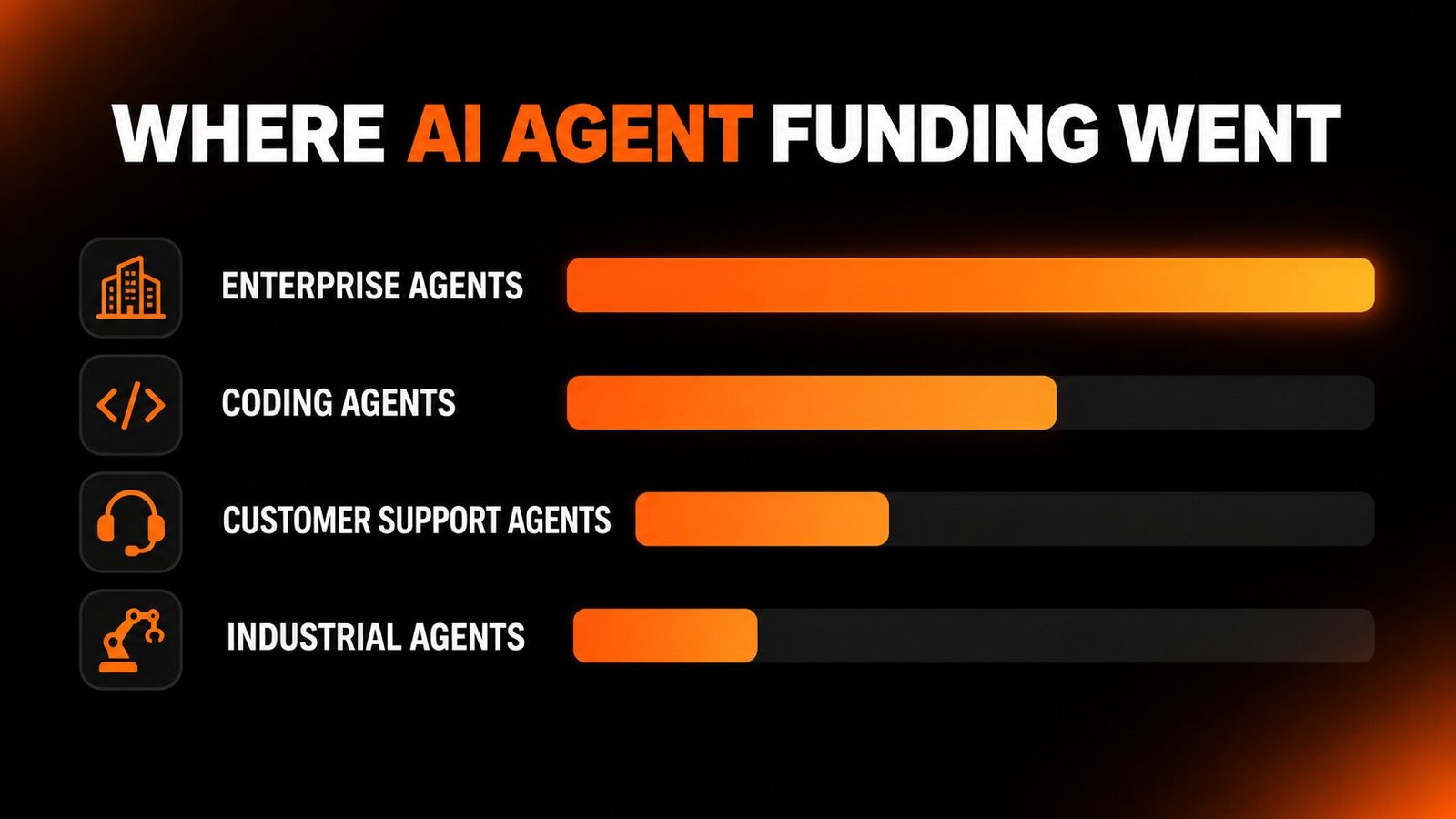
Short answer: Money is moving into four buckets: applied agents for specific industries, general-purpose agents, infrastructure that runs agents, and security that watches them. Applied agents took about $965 million across five rounds. Security took $301.5 million across three. Infrastructure is the smallest bucket here, but Daytona’s $1 billion valuation shows investors take it seriously.
| Category | Rounds | Combined amount | Companies |
|---|---|---|---|
| Applied agents | 5 | About $965M | Legora, Pigment, Town, Vesta, Flai |
| General-purpose agents | 1 | More than $500M | Manus |
| Agent infrastructure | 1 | $60M | Daytona |
| Agent security and governance | 3 | $301.5M | Armadin, Rein Security, Opsin |
| Total | 10 | More than $1.8B | All ten rounds |
Infrastructure: where agents run
Daytona raised a $60 million Series B at a $1 billion valuation on October 20, led by FirstMark, per Fortune. Its pitch is simple: agents need their own computers. Daytona sells isolated sandboxes where an agent can write code, browse and run software, and says it can set one up in 60 milliseconds. Fortune lists Anthropic, OpenAI and Nvidia among its customers. CEO Ivan Burazin also argues that agents lean on CPUs, citing an Arm estimate of 120 million CPU cores per gigawatt for agentic data centres, four times the traditional figure.
Security: who watches the agents
Rein Security raised a $25 million Series A co-led by Glilot Capital and Sienna Venture Capital, taking its total to $35 million, per SecurityWeek. Opsin raised $21 million co-led by SYN Ventures and Race Capital. Opsin’s own analysis found that 93% of misaligned tools connected to agents had full, unrestricted access to the systems they touched, and just one in 200 needed human approval before acting, per Dealroom. Rein cites Gartner in projecting spending on securing AI near $4.8 billion in 2027, up 68.7% from 2026.
What does this mean for IoT and industrial teams?
Short answer: Agents are moving from chat windows toward systems that act, including inboxes, loan files and company networks. For IoT teams, three things follow: lock down device and agent identity first, plan for the edge compute agents will demand, and test defences against automated attackers before piloting agents near operational technology.
Start with security, because the attackers are already automated. Armadin’s August exercise, with 26,000 agents and about 17 million offensive actions, shows the pace. IoT Insights Hub has covered how AI attacks on industrial control systems unfold, and the first line of defence is still device authentication. If an agent can act on a device, that device must prove who it is and what it may do.
Next, compute. If Daytona’s CEO is right that agents need CPU-heavy infrastructure, some of that work will move closer to the edge. Our guide to edge AI benefits explains what local inference buys you, and our look at AIoT use cases shows where it already pays off.
Finally, pick low-risk starting points. Our piece on AI-driven automation covers wins that do not need an agent to touch live equipment. Teams already worn down by IoT alert fatigue are natural candidates for agents that triage alerts. IoT Mail Bridge also covers how industrial AI agents are reaching factory floors, and regulation is arriving too: its explainer on Cyber Resilience Act duties for IoT makers sets out what device makers owe.
What do critics say about the AI agent funding boom?
Short answer: Critics point to three weak spots: valuations that jump faster than proven revenue, a loose definition of what counts as an agent, and a governance gap that leaves many agents lightly supervised. Each criticism has data behind it. None of them, so far, has slowed the cheques.
The valuation worry. Instinct’s $1 billion round, closed on September 28, valued it at $10 billion, up from $2.5 billion weeks earlier, per Reuters. The Business Perspective’s breakdown of Instinct’s $1 billion round calls the price a valuation trap. Legora’s valuation rose about 57% in roughly six months. Revenue figures such as Legora’s and Pigment’s come from the companies themselves.
The definition problem. Pigment is a planning platform adding agents. Town sells workplace assistants. Whether they count as “AI agent startups” depends on where you draw the line, and another editor could draw it differently. IoT Insights Hub counted companies that market agents as the core product.
The governance gap. Opsin’s one-in-200 figure suggests many agents act with little human sign-off. SiliconANGLE notes that agent swarms have already been used in several high-profile breaches.
The platform risk. CNBC observed that investor appetite has held even as foundation models improve quickly and price competition intensifies. Daytona’s CEO concedes that cloud giants could rebuild their infrastructure for agents, per Fortune.
The bigger question is whether AI valuations as a whole are stretched. The Business Perspective takes that up in its analysis of the AI bubble question, and its Q3 2026 venture funding report headlines a 64% AI share of venture money. Our read at IoT Insights Hub is simple. The money is real, the revenue claims are early, and valuations are a statement of sentiment, not proof of durability.
What do readers ask about AI agent startup funding October 2026?
How much did AI agent startups raise in October 2026?
The ten largest disclosed AI agent rounds between October 1 and October 26, 2026 add up to more than $1.8 billion, by IoT Insights Hub’s tally of company announcements and press reports. Legora’s $550 million Series E and Manus’s round above $500 million together make up more than half of that total.
Which AI agent startup raised the most in October 2026?
Legora raised the most: a $550 million Series E at an $8.8 billion post-money valuation, announced on October 21, 2026 and led by Atreides Management, per the company. Manus came second with more than $500 million, co-led by Boyu Capital and IDG Capital, though it has not disclosed its valuation.
Which investors led the biggest AI agent rounds in October 2026?
Atreides Management led Legora, the EQT-managed Scaleup Europe Fund led Pigment, and FirstMark led Daytona. Boyu Capital and IDG Capital co-led Manus, while Forerunner Ventures and Menlo Ventures co-led Town. ICONIQ, Andreessen Horowitz and First Round Capital each backed two of the ten rounds, per the companies’ announcements.
Are AI agent startups raising at billion-dollar valuations?
Yes, in half of the cases. Five of the ten rounds carried disclosed valuations of $1 billion or more: Legora at $8.8 billion, Armadin above $2.5 billion, Pigment at $2.3 billion, and Daytona and Town at $1 billion each. Manus did not disclose a valuation, though Bloomberg had reported a $4 billion target.
Why are AI agent security startups raising money?
Both Rein Security and Opsin argue that companies deploy agents faster than they can govern them. Opsin’s own analysis found just one in 200 misaligned agent tools required human approval before acting. Armadin, Rein and Opsin raised a combined $301.5 million in October 2026, per their announcements.
What does AI agent funding mean for IoT and industrial teams?
It means agents are heading toward connected systems, so identity, permissions and edge compute become buying priorities. Daytona’s CEO argues agents need CPU-heavy infrastructure, and Armadin’s August exercise shows how fast automated attackers can probe a network. IoT teams should audit device authentication and agent permissions before any pilot, not after.
Sources used for this tracker (as of October 26, 2026): TechCrunch (Manus, Town, Vesta, Flai), CNBC (Manus), Legora’s announcement and The Next Web (Legora, Town), Artificial Lawyer (Legora), Startbase (Legora valuation change), SiliconANGLE and SecurityWeek (Armadin, Rein Security), PR Newswire (Rein Security), i-scoop (Pigment), Fortune (Daytona), FinTech Global and Dealroom (Opsin), Mezha (Vesta investors), Reuters (Instinct), and Bloomberg as cited by CNBC and TechCrunch (Manus valuation target). Gartner figures are as cited by Rein Security. Company-reported metrics are labelled as such.
What should you take from this month’s agent funding?
The October picture is clear. AI agent startup funding October 2026 favours agents that already earn revenue, agents that run other agents, and agents that watch the rest. For IoT Insights Hub readers, the practical move is not to chase headlines. Ask where an agent would touch your devices and who is accountable when it acts. IoT Insights Hub will update this tracker when October closes and keep following the rounds that matter to connected systems.